Dental Health Blog · Gum Health
What Is a Deep Cleaning at the Dentist (and Is It Worth It)?
How scaling and root planing works, how it differs from a regular cleaning, and what recovery feels like.
Healthy Gums
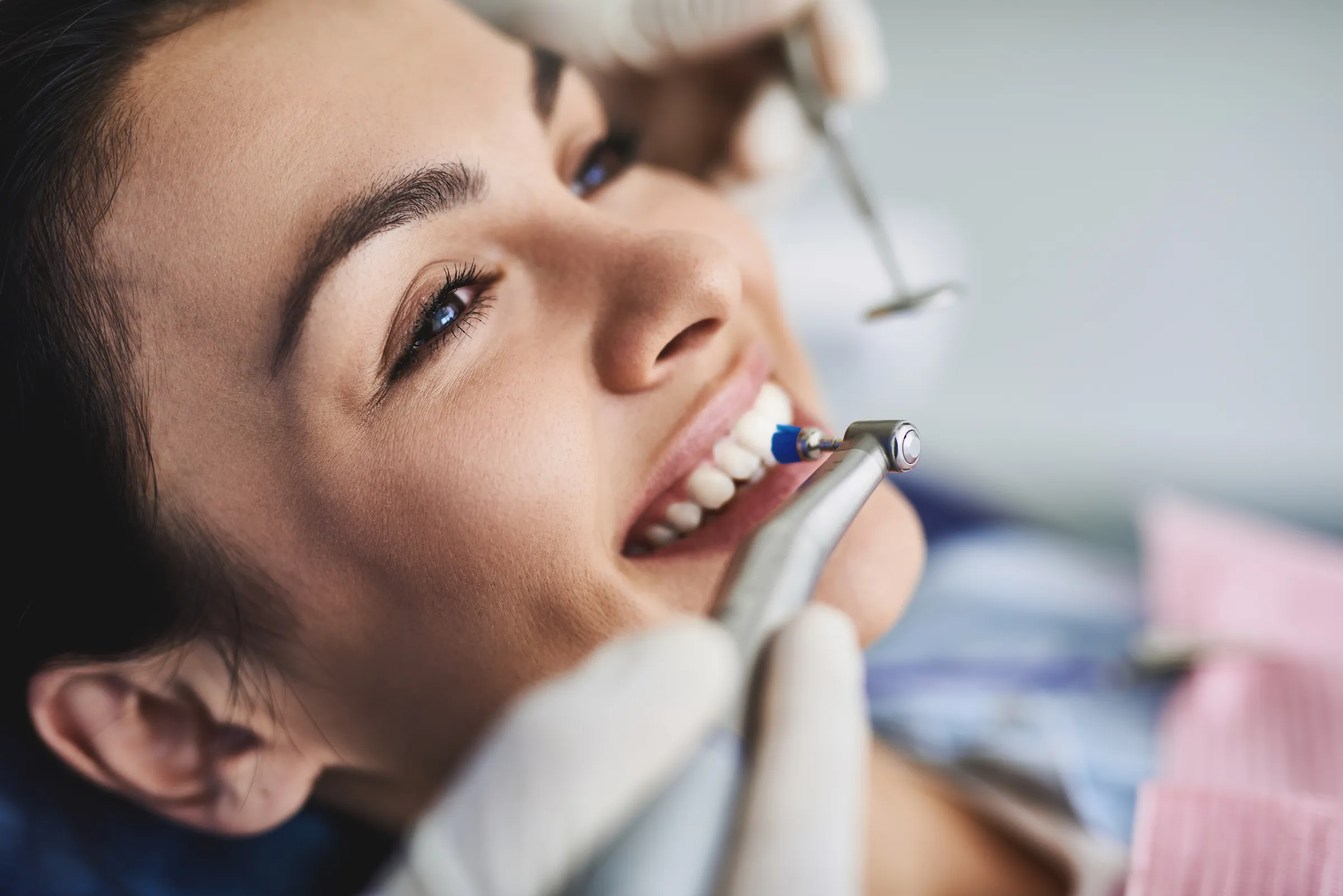
What is a deep cleaning at the dentist? A deep cleaning, known clinically as scaling and root planing, is a non-surgical treatment for gum disease that cleans below the gumline, where a regular cleaning does not reach. If your dentist or hygienist in Los Angeles has recommended one, this guide explains why, what happens during the visit, and how your gums heal afterward.
At Blue Pearl Dentistry in the Carthay area of Los Angeles, our team includes a periodontist (a dentist who specializes in the gums and bone that support the teeth), so patients who need gum treatment can be cared for in the same office.
What is a deep cleaning?
Gum disease starts with plaque, a sticky film of bacteria. When plaque is not removed, the gums become inflamed and pull away from the teeth, forming spaces called pockets. Plaque and hardened tartar collect in those pockets, where a toothbrush cannot reach. Left untreated, gum disease can lead to bone loss and tooth loss (ADA MouthHealthy).
A deep cleaning has two parts:
- Scaling Removes plaque and tartar above and below the gumline, all the way to the bottom of each pocket.
- Root planing Smooths the root surfaces so bacteria have fewer places to stick and the gums can reattach to the teeth.
Deep cleaning vs. regular cleaning: what is the difference?
| Regular cleaning (prophylaxis) | Deep cleaning (scaling and root planing) | |
|---|---|---|
| Purpose | Prevention for healthy gums | Treatment for gum disease |
| Where it cleans | Above and just at the gumline | Below the gumline, to the bottom of the pockets |
| Numbing | Not usually needed | Local anesthetic is common |
| Visits | One visit | Often one to two visits (by section of the mouth) |
| Follow-up | Routine checkups | Re-check of pocket depths, then periodontal maintenance visits |
How do you know if you need a deep cleaning?
Your dentist or hygienist measures the space between each tooth and the gum with a small ruler called a probe. Deeper pockets, bleeding when probed and tartar below the gumline on X-rays are signs that a regular cleaning is no longer enough. Common signs you may notice at home include:
- Gums that bleed when you brush or floss
- Red, swollen or tender gums
- Bad breath that does not go away
- Gums pulling back from the teeth
- Teeth that feel loose or are shifting
Gum disease is common: the ADA notes that chronic periodontitis affects 47.2% of U.S. adults over 30.
Is a dental deep cleaning worth it?
Yes, when it is recommended for measured gum disease. A study published in the Journal of the American Dental Association in July 2015 found that scaling and root planing benefits patients with chronic periodontitis (cited by ADA MouthHealthy). Treating gum disease early is simpler and less costly than treating the bone loss and tooth loss it can cause later. A deep cleaning is not a cosmetic upgrade to a regular cleaning; if your gums are healthy, you do not need one.
Does a deep cleaning hurt?
Most patients feel pressure rather than pain, because the area is numbed with local anesthetic. Afterward, the ADA notes you may have some pain for a day or two and tooth sensitivity for up to a week, and your gums may be tender, swollen or bleed a little. Your dentist may recommend a mouth rinse or medication to help healing.
What happens during a deep cleaning at Blue Pearl Dentistry?
- Exam and charting: we measure pocket depths and take digital X-rays to see tartar and bone levels.
- Numbing: the section being treated is numbed so you stay comfortable.
- Scaling: ultrasonic and hand instruments remove plaque and tartar below the gumline.
- Root planing: root surfaces are smoothed to help the gums reattach.
- Re-check: a follow-up visit measures how your gums have healed and whether more care is needed.
How do you care for your gums after a deep cleaning?
- Brush twice a day with a soft toothbrush
- Clean between your teeth every day
- Use any prescribed rinse as directed
- Avoid tobacco, which slows healing
- Keep your re-check and periodontal maintenance visits
If pockets stay deep after healing, the next step may be a periodontal treatment such as guided tissue regeneration or pocket reduction surgery, which our periodontist can explain. To book an exam, call (424) 622-5278.
Sources: ADA MouthHealthy – Scaling and Root Planing; ADA MouthHealthy – Gum Disease; American Academy of Periodontology – Non-Surgical Treatments; NIDCR – Gum Disease; MedlinePlus – Periodontitis.
Frequently Asked Questions
- How long does a deep cleaning take?
- Most deep cleanings are done in one or two visits, with each visit treating one or two sections (quadrants) of the mouth. Your dentist will tell you the plan after measuring your gums.
- Will my gums go back to normal after a deep cleaning?
- Inflammation usually calms down within a few weeks and pockets can get shallower as gums reattach. Gum tissue that has already receded does not grow back on its own; your periodontist can discuss options such as a soft tissue graft.
- How often do I need a deep cleaning?
- A deep cleaning is usually a one-time treatment. Afterward, most patients need periodontal maintenance cleanings more often than routine cleanings. Your dentist sets the interval based on your gums.
- Is a deep cleaning covered by insurance?
- Many dental plans cover scaling and root planing when gum disease is documented. We work with many PPO plans and our team can check your benefits before treatment.
- Can I eat after a deep cleaning?
- Wait until the numbness wears off so you do not bite your cheek or tongue, then choose soft foods for the rest of the day.
- Who performs deep cleanings at Blue Pearl Dentistry?
- Our dentists and hygienists provide deep cleanings, and our periodontist, Dr. Deborah Termeie, treats advanced gum disease.
Best Dental Experience
This was my best dental experience ever. Dr. O was extremely thorough and explained everything to me clearly. She did not try to recommend unnecessary procedures. As a doctor, I really appreciated her bedside manner and will refer many patients to her.

They are the Best in LA
I am thrilled with the results of my recent Invisalign treatment. My teeth look fantastic thanks to Dr. Huang, Diana, and the whole Blue Pearl team. They were super thoughtful and made me feel at ease throughout the entire process. They are the best in LA!

Affordable Care
We accept all major credit cards, debit cards, cash and checks. We also accept dental PPO plans and for those who qualify, we partner with CareCredit and Cherry for financing.


Get in Touch
Office Hours
A deep cleaning, also called scaling and root planing, is a dental treatment for gum disease. The dentist or hygienist removes plaque and tartar from below the gumline, down to the bottom of the gum pockets, then smooths the tooth roots so the gums can reattach. It usually takes one or two visits with local anesthetic. At Blue Pearl Dentistry in Carthay, Los Angeles, the team includes a periodontist.