Implant Preparation & Oral Surgery
Sinus Lift
Increase bone height and support for upper jaw dental implants in Los Angeles.
At Blue Pearl Dentistry in the Carthay area of Los Angeles—near Beverly Grove, Mid-City, and the Fairfax District—we perform sinus lift procedures to help patients who lack upper jawbone density. This advanced oral surgery raises the sinus floor and adds bone material, creating the foundation needed for stable, long-lasting implants.
Sinus Lift in Los Angeles
Sinus Lifts at Blue Pearl Dentistry
Patients from Carthay, Beverly Grove, Mid-City, and surrounding Los Angeles neighborhoods often need a sinus lift before receiving implants in the upper back jaw. This area naturally has less bone, and tooth loss can accelerate bone shrinkage. A sinus lift creates the proper support for predictable implant success.
What Is a Sinus Lift?
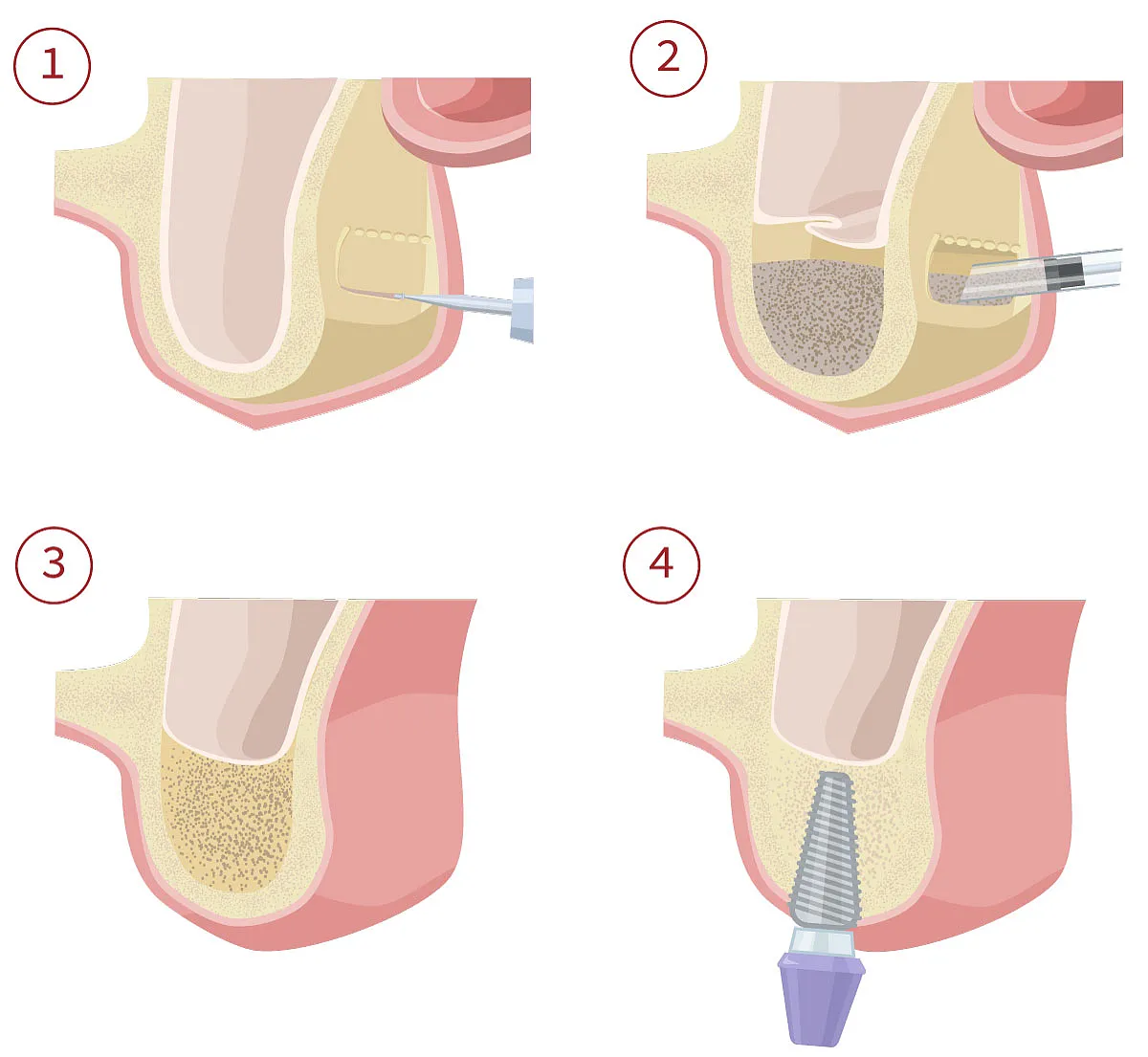
A sinus lift—also called sinus augmentation—is a surgical procedure that gently elevates the sinus membrane and places bone graft material beneath it. Over time, the graft integrates with your natural bone, increasing height and density.
- Improves Implant Candidacy Restores adequate bone for placing implant posts.
- Strengthens Bone Structure Adds height and volume where bone has thinned.
- Long-Term Support Creates a stable foundation for secure prosthetic teeth.
- Predictable Healing Modern techniques support smooth, reliable outcomes.
Why a Sinus Lift May Be Needed
Several factors can reduce bone height in the upper jaw, making a sinus lift an important preparatory step before implant placement.
- Natural Anatomy The upper molar area has naturally thinner bone.
- Tooth Loss Missing teeth lead to rapid bone resorption over time.
- Sinus Expansion Sinuses can enlarge with age, reducing available bone.
- Periodontal Disease Bone loss from gum disease may affect the upper jaw.
How the Sinus Lift Procedure Works
The sinus area is numbed for comfort. A small window is created in the bone, the sinus membrane is gently lifted, and bone graft material is placed underneath. The graft is then given time to integrate and strengthen the area.
- Cone beam CT imaging for precise planning
- Guided surgical techniques for safety and accuracy
- Biocompatible graft materials for predictable integration
- Membrane protection to support healing
Healing & Implant Placement
Healing time varies depending on the extent of bone needed. Many patients require several months for the graft to integrate fully before placing implants, while certain cases may allow for immediate or early implant placement.
Recovery & Aftercare
Most patients experience mild pressure or congestion for a few days. We provide detailed postoperative instructions to support smooth healing and minimize discomfort.
Next Steps
If you’ve been told you lack enough bone for upper jaw implants, a sinus lift may make implant treatment possible. We work with many PPO plans and offer flexible financing options to support your care.
Sinus Lift FAQs
- Is a sinus lift painful?
- A sinus lift is performed under local anesthesia, and most patients report only mild, manageable discomfort in the days following the procedure. Dr. Robert S. Huang uses careful surgical technique to gently elevate the Schneiderian membrane while minimizing tissue trauma.
- How long does healing take before implants can be placed?
- Most sinus augmentation grafts require four to nine months of integration before the new bone is dense enough to support a biocompatible titanium implant post. Blue Pearl Dentistry monitors graft maturation with periodic digital X-rays or cone beam CT imaging to confirm readiness for implant placement.
- What materials are used for the bone graft?
- Blue Pearl Dentistry uses biocompatible graft materials — including allograft, xenograft, and synthetic options — that integrate predictably with natural bone to build sufficient volume in the posterior maxilla. The choice of material depends on the amount of bone height needed and the patient’s individual healing profile.
- Is a sinus lift always necessary for upper implants?
- No — a sinus lift is only needed when there is insufficient bone height between the alveolar ridge and the maxillary sinus floor to stabilize an implant. Cone beam CT imaging at Blue Pearl Dentistry provides precise three-dimensional measurements that determine whether augmentation is required before implant placement.
- Can a sinus lift fail?
- Sinus membrane perforation and graft failure are uncommon when the procedure is performed with careful surgical planning and technique. Following all postoperative instructions — including avoiding forceful nose-blowing and sneezing with an open mouth — supports uneventful healing and successful graft integration.
- Will breathing or sinuses be affected?
- A properly healed sinus lift does not interfere with normal sinus function or breathing. Temporary mild congestion may occur in the first week, but the sinus membrane remodels around the graft without long-term airway changes.
- Is a sinus lift covered by insurance?
- Some PPO dental plans provide benefits for sinus augmentation when it is medically necessary to support implant placement. Our team can help you review your coverage and discuss flexible financing options for any remaining balance.
- How do I get started?
- Contact Blue Pearl Dentistry in the Carthay neighborhood of Los Angeles to schedule an implant evaluation. We use cone beam CT imaging to assess your upper-jaw bone volume and determine whether a sinus lift is the right step in your treatment plan.
Best Dental Experience
This was my best dental experience ever. Dr. O was extremely thorough and explained everything to me clearly. She did not try to recommend unnecessary procedures. As a doctor, I really appreciated her bedside manner and will refer many patients to her.

They are the Best in LA
I am thrilled with the results of my recent Invisalign treatment. My teeth look fantastic thanks to Dr. Huang, Diana, and the whole Blue Pearl team. They were super thoughtful and made me feel at ease throughout the entire process. They are the best in LA!

Affordable Care
We accept all major credit cards, debit cards, cash and checks. We also accept dental PPO plans and for those who qualify, we partner with CareCredit and Cherry for financing.